Facet Joint Injections and Medial Branch Blocks
Home Procedures Offered Core/Standard Procedures Facet Joint Injections and Medial Branch Blocks
Facet Joint Injections and Medial Branch Blocks
Facet joint injections and medial branch blocks relieve facet joint-related pain by reducing inflammation or blocking pain signals, helping diagnose and treat chronic back and neck pain.
Share this page:
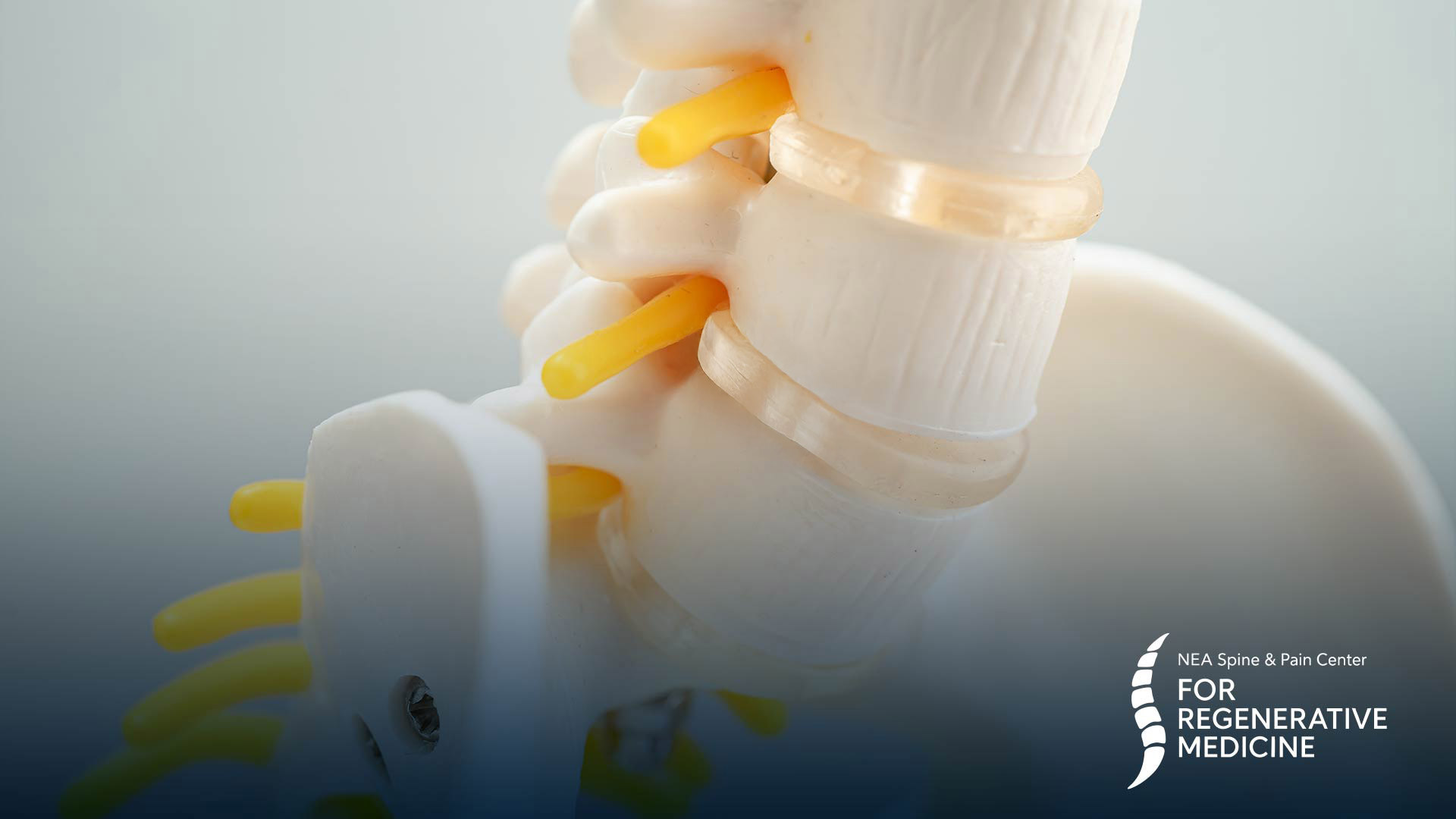
The purpose of facet joint injections and medial branch blocks is to alleviate pain that originates from the facet joints in the spine.
Facet joints are tiny spinal joints that support and aid in back rotation and bending. Injury or arthritis can cause inflammation and irritation in your facet joints. The pain may extend from the spine to the buttocks, hip, and back of the thigh if the facet joints in the lower back or lumbar region are irritated, or extend from the spine to the neck, head, and shoulders if the facet joints in the upper back or cervical region are irritated.
The mechanism of medial branch block vs facet joint injection:
Facet joint injections and medial branch blocks are minimally invasive procedures that can detect and ease back or neck pain. However, their mechanisms of pain control differ, as facet joint injections are administered directly into the facet joint, while medial branch blocks are administered to the medial branch nerves, which transmit pain signals from the facet joints to the brain.
A medial branch block is used for diagnosis, as it figures out where your pain is originating by numbing the tiny nerves that send pain signals from your facet joints to your brain, which are called medial branch nerves. The relief normally lasts a few hours to a few days, which is sufficient to tell if those facet joints are the cause of your pain.
On the other hand, a facet joint injection is used for diagnosis and treatment by injecting a small quantity of steroid and anesthetic directly into the irritated joint, reducing the inflammation and providing longer-lasting comfort for weeks or even 3–4 months.
| Procedure | Medial Branch Block | Facet Joint Injection |
| Purpose | Provides short-term relief and is mainly used to diagnose the source of pain. | Provides long-term relief and is used to diagnose and treat back and neck pain. |
| Pain Relief Duration | Lasts from a few hours to several days | Lasts from several weeks to 3–4 months |
| Procedure Type | Minimally invasive outpatient procedure | Minimally invasive outpatient procedure |
1. Medial branch blocks:
The medication is administered outside the joint space, near the medial branch nerve, which supplies the facet joint.
How do medial branch blocks relieve pain?
• It prevents the nerve from transmitting pain signals to the brain
• It reduces pain transmitted to the brain by obstructing specific fibers (C fibers) within the nerve.
• It reduces the permeability of nerve fibers to receive blood; thus reducing the transmission of pain.
What are the medial branch block procedure details?
This procedure is frequently performed twice, with a gap of several days between each session. After preparing for a medial branch block, Dr. Abraham blocks the medial branch nerve by injecting a long-acting local anesthetic during the first session, while injecting a short-acting local anesthetic in the second session.
How long does a medial branch block last?
The medial branch blocks are just diagnostic injections for the spinal facet pain. One of the primary medial branch block benefits is identifying the source of your pain. The effectiveness of medial branch blocks is only temporary pain relief.
When does Dr. Abraham consider medial branch blocks with radiofrequency ablation?
Dr. Abraham will discuss with you a more permanent procedure (Radiofrequency Ablation) if you experience pain relief with medial branch blocks.
2- Facet joint injections:
A joint capsule, composed of synovial membrane tissue, surrounds facet joints. In case of an inflamed synovial membrane tissue, facet joint pain arises.
How does pain relief facet joint injection work?
• Alleviate inflammation and irritation.
• Reduce pain by inhibiting the production of inflammatory chemicals.
• Decrease the sensitivity of pain receptors, resulting in a reduction in the pain signals transmitted through the nerves.
• Reduce arthritic pain and improve spine flexibility, as facet joint injections and arthritis are commonly linked because arthritis causes facet joint inflammation.
What are the facet joint injection procedures details?
The facet joint injections for chronic pain involve injecting a steroid and a local anesthetic into the facet joint. It may be repeated if you experience satisfactory, long-lasting pain relief from these injections.
Multiple facet joint injections in cervical spine and facet joint injection for lower back pain may be administered to alleviate pain that originates from different facet joints.
What to expect from a facet joint injection?
• Six hours following the injection, the local anesthetic or numbing medication will disappear.
• Your pain may temporarily return before the steroid medication's effectiveness appears. This does not indicate that the block is ineffective.
• The steroid or anti-inflammatory medication may not begin to act for 24 to 72 hours. Occasionally, it may require up to one week for the steroid to be effective. The blockage has the potential to persist for weeks to months.
The facet joint injection cost depends on your insurance coverage and individualized treatment plan, and our staff will guide you through every step.
How Dr. Abraham performs the procedures?
1- You will receive medication through the IV to alleviate your pain and promote relaxation, while remaining alert to inform Dr. Abraham of any unusual symptoms or pain.
2- You will be positioned on your stomach on a specialized X-ray table.
3- Under fluoroscopy, Dr. Abraham will determine the precise location(s) that require blocking or injection. He will insert the needle into the appropriate location after applying a local anesthetic.
4- He will observe the needle as it travels into the facet joint or space adjacent to the nerve branch. Then he will inject the medication after the syringe is positioned correctly.
5- You will be transported to the recovery area and will be closely monitored for the next 30-45 minutes.
6- Once Dr. Abraham has authorized your discharge, he will provide you with detailed written discharge instructions.
Risks of facet joint injections and medial branch blocks:
Complications and risks are exceedingly rare; however, facet joint injection risks may include spinal cord damage, phrenic nerve damage, chemical meningitis, hemorrhage, septic arthritis, and infection. Facet joint injections side effects include pain and numbness, which typically subside within a few hours.
At New England Advanced Spine and Pain Center for regenerative medicine, Dr. Abraham, board-certified anesthesiologist and pain management specialist, and his expert team achieve an elevated success rate of medial branch blocks and facet joint injections, which reduce inflammation, improve mobility, and restore your quality of life.