Platelet Rich Plasma Treatment (PRP)
Home Procedures Offered Advanced Procedures Platelet Rich Plasma Treatment (PRP)
Platelet Rich Plasma Treatment (PRP)
Platelet-rich plasma treatment (PRP) & biologics use your own blood’s platelets to naturally boost healing, reduce inflammation, and restore function in joints, tendons, muscles, and skin without surgery.
Share this page:
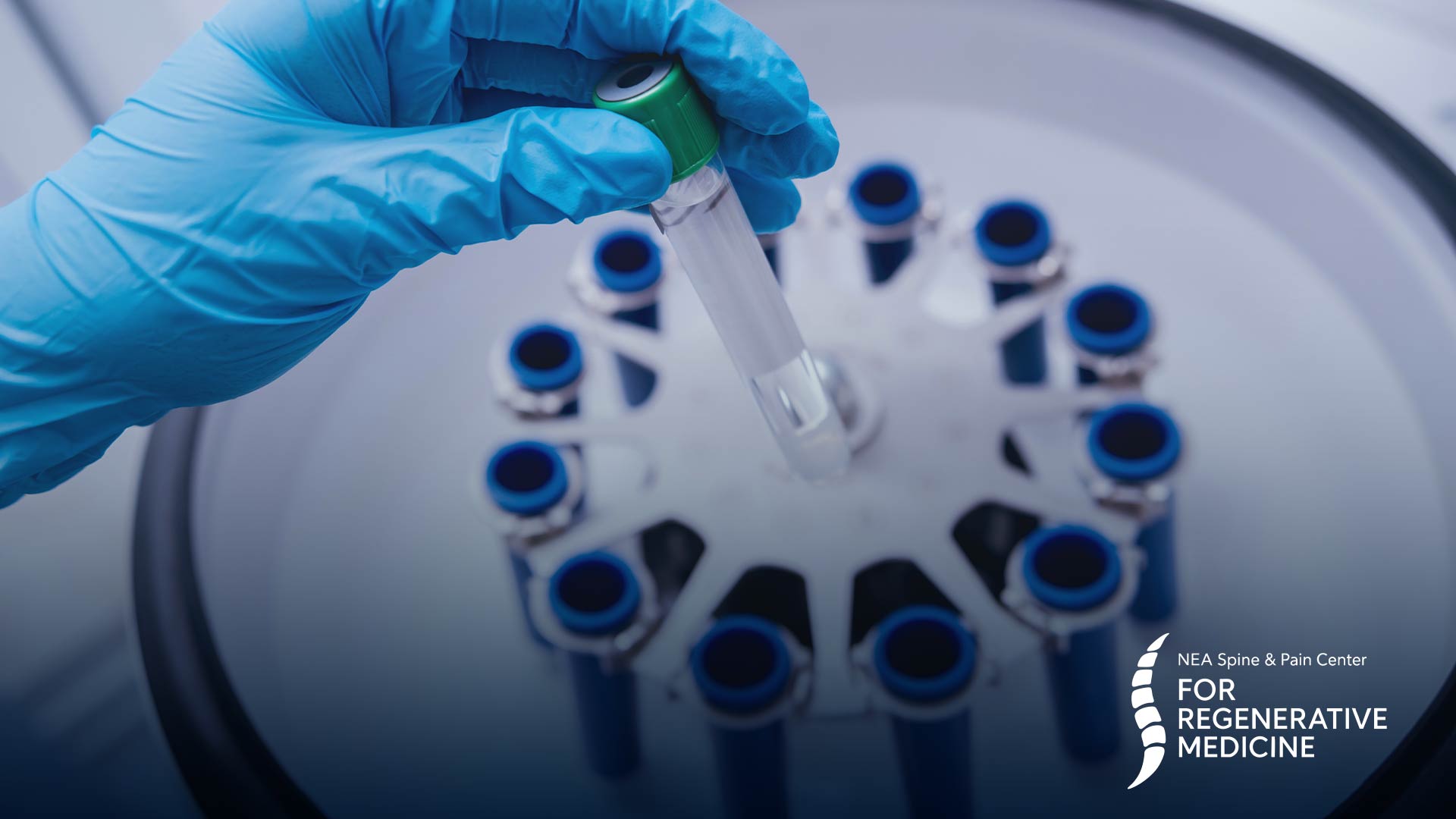
Platelet-rich plasma therapy is one of the orthobiologics, which are natural substances employed to accelerate the healing process by providing supplementary support for the repair of bones, joints, and muscles.
The orthobiologics approach is especially beneficial for adults who require a speedy recovery to meet work, family, or athletic commitments, as the body's capacity to repair itself decreases with age. Orthobiologics may serve as an effective nonsurgical alternative or may be implemented in conjunction with surgery for chronic ligament and tendon injuries and strains that have not responded favorably to conventional conservative treatments, including medications, injections, and physical therapy.
What is the definition of orthobiologics?
Orthobiologics are unique substances that are derived from our bodies or natural sources and are used to facilitate the repair and regeneration of tissue. Growth factors, proteins, or stem cells are examples of these substances. Biologics therapy is administered directly into the affected region to facilitate healing. This has the potential to enhance your overall function, alleviate pain, and encourage your body to repair damaged tissues.The orthobiologics approach is especially beneficial for adults who require a speedy recovery to meet work, family, or athletic commitments, as the body's capacity to repair itself decreases with age. Orthobiologics may serve as an effective nonsurgical alternative or may be implemented in conjunction with surgery for chronic ligament and tendon injuries and strains that have not responded favorably to conventional conservative treatments, including medications, injections, and physical therapy.
How does PRP work?
Platelet-rich plasma (PRP) injections are a treatment that utilizes the platelets of a patient to facilitate tissue function and restoration. Platelets, which are present in the patient's own blood, are disc-shaped, tiny cells that are essential for clotting and healing. They contain growth factors that can facilitate tissue repair, help the natural healing process, alleviate inflammation, and hasten recovery. As a result, inflammation in the joint fluid is reduced, improving overall function and reducing pain.Who is a suitable candidate for PRP injections?
Patients who are eligible for platelet-rich plasma injections are typically those who may benefit from improved tissue regeneration and healing. PRP injections are frequently prescribed for the following:• Athletes or active individuals with soft tissue injuries.
o The treatment of sports and activity-related injuries with platelet-rich plasma (PRP) can facilitate the recovery process.
o This treatment is particularly effective for nonsurgical injuries, such as tennis elbow or tendinitis, as it accelerates the healing process.
o PRP injections are also advantageous for individuals who wish to avoid surgical intervention and suffer from soft tissue or tendon injuries.
o When surgery is necessary, platelet-rich plasma injections during the procedure accelerate the healing process and reduce recovery time.
o The most frequent application of PRP injections is for sports injuries that are associated with the Achilles tendon, anterior cruciate ligament (ACL), hamstring, lateral and medial epicondyles, Patellar tendon, and cartilage.
• Patients with arthritis seeking to alleviate pain and enhance joint function.
Individuals who suffer from arthritis or discomfort in their main joints may find PRP injections for arthritis advantageous. In these patients, PRP joint injections can alleviate discomfort and enhance functionality. PRP may be administered as an alternative to joint replacement or as an adjunct to surgery. It is employed most frequently in the PRP knee treatment, hip, shoulder, and thumb joints.
The procedure involves the following steps:
o The treatment of sports and activity-related injuries with platelet-rich plasma (PRP) can facilitate the recovery process.
o This treatment is particularly effective for nonsurgical injuries, such as tennis elbow or tendinitis, as it accelerates the healing process.
o PRP injections are also advantageous for individuals who wish to avoid surgical intervention and suffer from soft tissue or tendon injuries.
o When surgery is necessary, platelet-rich plasma injections during the procedure accelerate the healing process and reduce recovery time.
o The most frequent application of PRP injections is for sports injuries that are associated with the Achilles tendon, anterior cruciate ligament (ACL), hamstring, lateral and medial epicondyles, Patellar tendon, and cartilage.
• Patients with arthritis seeking to alleviate pain and enhance joint function.
Individuals who suffer from arthritis or discomfort in their main joints may find PRP injections for arthritis advantageous. In these patients, PRP joint injections can alleviate discomfort and enhance functionality. PRP may be administered as an alternative to joint replacement or as an adjunct to surgery. It is employed most frequently in the PRP knee treatment, hip, shoulder, and thumb joints.
• Individuals with chronic pain in the shoulder, hip, knee, or lower back.
• Individuals who are recovering from surgery and wish to accelerate the healing process in tissues such as tendons or muscles.
• Individuals who are recovering from surgery and wish to accelerate the healing process in tissues such as tendons or muscles.
• Individuals with hair loss conditions who wish to stimulate hair growth apply PRP for hair loss.
• PRP facial procedure can be applied in the cosmetic field because PRP for skin rejuvenation adds a youthful and fresh appearance.
PRP injections are typically recommended for patients who have not responded favorably to treatments such as physical therapy, rest, or medications. Nevertheless, PRP may not be suitable for all individuals. Consult Dr. Abraham, board-certified anesthesiologist and pain management specialist at New England Advanced Spine and Pain Center for regenerative medicine, to find out whether PRP therapy is appropriate for you. He is distinguished by multiple PRP success stories and perfect PRP treatment reviews.
PRP injections are typically recommended for patients who have not responded favorably to treatments such as physical therapy, rest, or medications. Nevertheless, PRP may not be suitable for all individuals. Consult Dr. Abraham, board-certified anesthesiologist and pain management specialist at New England Advanced Spine and Pain Center for regenerative medicine, to find out whether PRP therapy is appropriate for you. He is distinguished by multiple PRP success stories and perfect PRP treatment reviews.
What to expect during a platelet-rich plasma (PRP) injection?
By extracting a small quantity of your blood, purifying it to isolate the platelets, and subsequently injecting the concentrated platelets into the affected area, PRP plasma is generated.The procedure involves the following steps:
• A small quantity of blood is extracted from your arm, similar to a routine blood test.
• The blood is then put in a centrifuge, which spins it at high speeds. This procedure separates the platelets, a solid component of the blood, from other blood cells.
• Local anesthesia may be administered to alleviate discomfort during the injection process.
• Dr. Abraham directly injects the selected area, including the scalp, skin, muscles, tendons, and joints, with concentrated platelet-rich plasma (PRP). This is typically accomplished under the supervision of an ultrasound device or X-ray.
•The entire procedure typically lasts between 30 and 60 minutes.
Platelet rich plasma pros and cons:
PRP therapy benefits:
• PRP therapy is a viable alternative for individuals who have not experienced substantial alleviation from conventional treatments and promotes tissue rejuvenation.• PRP orthopedics has the potential to prevent or postpone surgery for patients with chronic orthopedic conditions or injuries. This may be advantageous for athletes who wish to prevent potentially career-ending or career-altering surgeries.
• There is a negligible risk of infection associated with PRP injections, and PRP side effects or complications are rare.
PRP therapy cons:
• Minimal pain at the injection site is common in the short term; it can typically be managed with over-the-counter pain relievers.• In certain instances, it may be necessary to undergo multiple PRP sessions to achieve optimal outcomes. Dr. Abraham will discuss with you regarding the optimal treatment strategy for your unique circumstances.
Recovery from a platelet-rich plasma (PRP) injection:
The PRP recovery time is typically straightforward; however, it depends upon the condition being addressed and the area treated.• Mild discomfort, swelling, or stiffness at the injection site are frequent during the initial days.
• Anti-inflammatory medications should be avoided, as they may disrupt the healing process that PRP is intended to facilitate.
• It is advisable to refrain from engaging in strenuous activities for a day or two after the injection. Depending on the area that has been treated, it may be beneficial to engage in light movements or stretching to facilitate recovery.
• PRP promotes healing; however, the complete benefits may not be apparent for several months, as improvements may take a few weeks.
If you're looking for PRP therapy near you, think about consulting a board-certified pain management specialist like Dr. Abraham. He can evaluate your situation and suggest a treatment plan that's beneficial for you.
PRP vs stem cell therapy:
People often compare PRP vs stem cell therapy when exploring regenerative options. PRP uses the growth factors in your own blood to promote healing. Stem cell therapy goes a step further by introducing cells that can actually turn into new tissue. PRP is usually simpler, less expensive, and great for joint or tendon injuries. Stem cells may be considered for larger or more complex damage.PRP treatment cost and finding PRP treatment near me:
Before starting PRP therapy, many patients want to know how much it will cost. The cost can vary depending on the number of sessions required, the area of your body being treated, and the location of the facility.If you're looking for PRP therapy near you, think about consulting a board-certified pain management specialist like Dr. Abraham. He can evaluate your situation and suggest a treatment plan that's beneficial for you.