Dorsal Root Ganglion (DRG) Stimulation
Home Procedures Offered Advanced Procedures Dorsal Root Ganglion (DRG) Stimulation
Dorsal Root Ganglion (DRG) Stimulation
Chronic pain disrupts daily life, affecting both body and mind. Dorsal root ganglion (DRG) stimulation offers targeted, minimally invasive relief when other treatments fail.
Share this page:
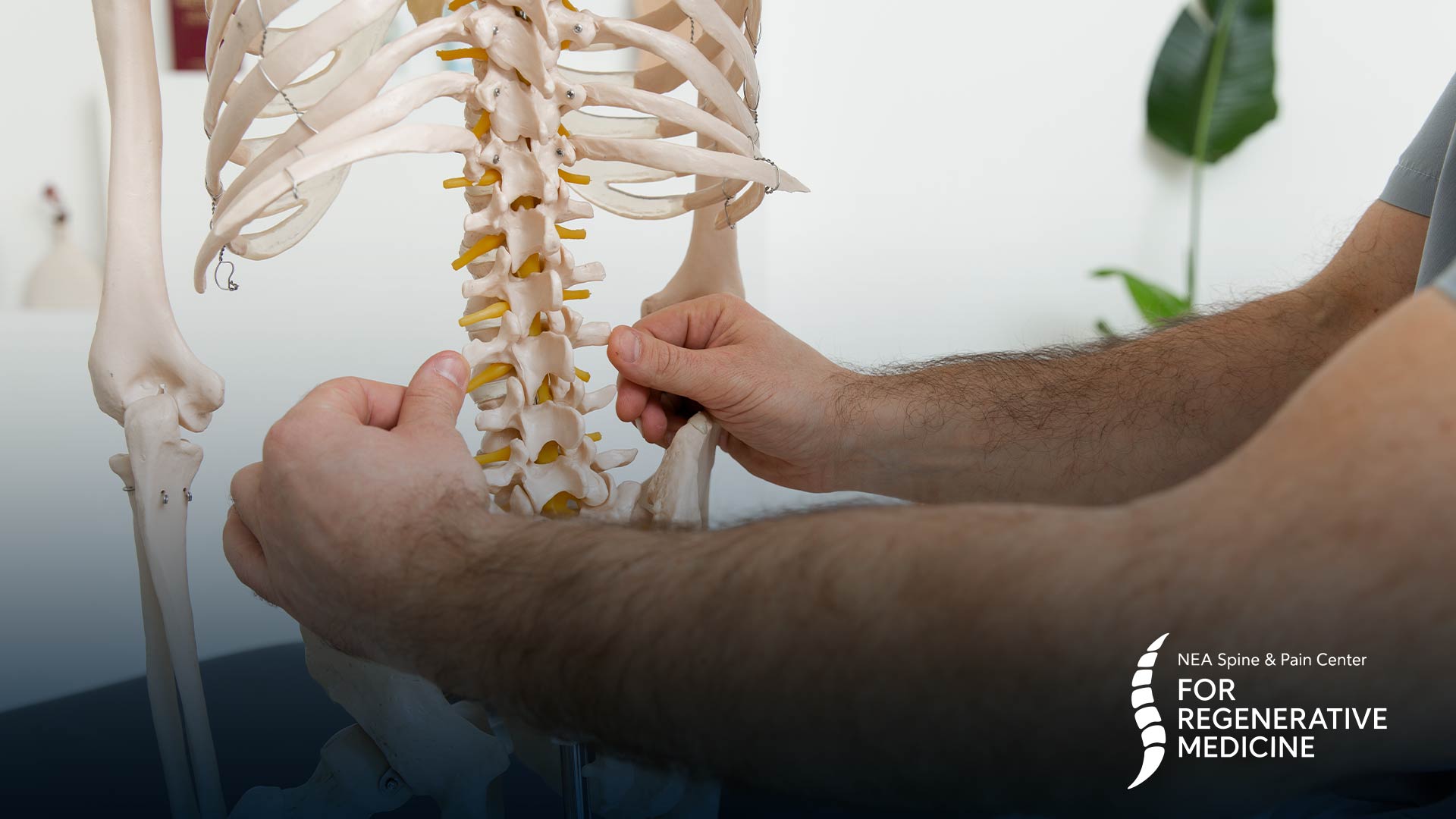
Chronic pain impacts not just your physical health but also your mental well-being. It can impede both mobility and interpersonal relationships. However, with healthcare innovation comes hope. The dorsal root ganglion stimulation device is more effective than traditional therapy in relieving chronic pain.
According to the National Institutes of Health, 11% of Americans live with chronic pain that lasts for more than six months. Injuries and infections can induce pain and distress; however, chronic pain is the result of an impaired nervous system. Dorsal root ganglion (DRG) stimulation therapy is an innovative neurostimulation therapy used to alleviate chronic pain in specific areas of the lower body, such as the foot, knee, hip, or groin, that are difficult to treat with spinal cord stimulation (SCS).
DRG stimulation is a minimally invasive procedure that provides targeted relief and offers a reversible alternative for nerve problems that haven’t responded to conservative treatments.
When conventional treatments do not work, patients suffering from chronic pain can seek alternative treatment. Spinal cord stimulation (SCS) is an alternative that inhibits pain signals from reaching the brain. According to research, spinal cord stimulation relieves pain in 40 - 50% of patients. While the advancement of SCS was significant, it still failed to provide a solution to the chronic pain of several individuals.
Dorsal root ganglia (DRGs) are clusters of nerve cells located along the spinal column that regulate pain signals. These signals travel through nerve fibers along the spinal column to the brain, where they transmit sensory information from the peripheral nervous system to the central nervous system.
There are many different DRGs associated with different body areas. Each nerve root communicates with the dorsal root ganglion in a way that allows sensory messages from a defined area of the body. As a result, DRG stimulation allows for targeted therapy to a single focal location.
Dorsal root ganglion (DRG) stimulation therapy targets the DRG that is associated with the pain area. Therefore, DRG therapy manages pain in targeted parts where it occurs and is especially helpful for patients who live with chronic pain in the lower body.
The DRG stimulation therapy system is composed of 3 parts that work together:
DRG stimulation is a minimally invasive procedure that provides targeted relief and offers a reversible alternative for nerve problems that haven’t responded to conservative treatments.
Treatment of chronic pain:
Traditionally, doctors recommended drugs to address chronic pain, such as opioids, which can lead to addiction and overdose. Chronic pain treatment strategies may also involve physical therapy, psychological therapies, nerve blocks, and surgery.When conventional treatments do not work, patients suffering from chronic pain can seek alternative treatment. Spinal cord stimulation (SCS) is an alternative that inhibits pain signals from reaching the brain. According to research, spinal cord stimulation relieves pain in 40 - 50% of patients. While the advancement of SCS was significant, it still failed to provide a solution to the chronic pain of several individuals.
Groundbreaking New Treatment: DRG Stimulation:
Researchers focused their attention on the dorsal root ganglion (DRG), a bundle of neurons positioned outside of the spinal cord. The DRG was once assumed to have no connection to pain, but researchers now know that this nerve bundle plays a vital role in nerve pain. This DRG stimulation therapy involves surgically implanting a stimulator that targets the dorsal root ganglion to alleviate CRPS-related lower limb pain.Click here to know more about DRG vs SCS
What are the dorsal root ganglia?
Dorsal root ganglia (DRGs) are clusters of nerve cells located along the spinal column that regulate pain signals. These signals travel through nerve fibers along the spinal column to the brain, where they transmit sensory information from the peripheral nervous system to the central nervous system.There are many different DRGs associated with different body areas. Each nerve root communicates with the dorsal root ganglion in a way that allows sensory messages from a defined area of the body. As a result, DRG stimulation allows for targeted therapy to a single focal location.
Dorsal root ganglion (DRG) stimulation therapy targets the DRG that is associated with the pain area. Therefore, DRG therapy manages pain in targeted parts where it occurs and is especially helpful for patients who live with chronic pain in the lower body.
How does DRG stimulation work?
Dr. Abraham, a board-certified anesthesiologist and pain management specialist, places a small electrode near the targeted dorsal root ganglion. This electrode is connected to a pulse generator implanted under the skin, which sends electrical pulses to the DRG, interrupting pain signals before they reach the brain.The DRG stimulation therapy system is composed of 3 parts that work together:
• A small pulse generator device sends out electrical pulses and contains a battery. It is implanted in a pocket of the upper buttock/lower back or the abdominal wall.
• Thin insulated wires carry the electrical pulses from the generator to the targeted dorsal root ganglia.
• A remote control allows the patient to adjust the stimulation settings within prescribed limitations, based on the pain pattern, or even turn it off.
Who is a candidate for DRG stimulation?
DRG therapy may be an option if you have chronic pain for at least six months, and traditional pain management therapies provide no relief.• Localized Neuropathic Pain: Those suffering from isolated chronic pain in a lower body part, such as the hip, knee, foot, groin, or rib, following an injury or surgical procedure.
• Complex Regional Pain Syndrome (CRPS): Patients with CRPS, particularly when the pain is localized to a specific area of the body.
• Pelvic Pain or Groin Neuralgia: Those experiencing severe pain in the pelvis or groin that does not respond to other therapies.
• Phantom Limb Pain: Perceived pain in an amputated limb.
What to expect during the DRG stimulation procedure?
After Dr. Abraham determines you are a candidate for DRG stimulation therapy, the procedure has two stages:• Trial Procedure: First, you’ll have a trial period to assess the effectiveness of DRG stimulation. Temporary electrodes are put near the dorsal root ganglion under anesthesia and linked to a device outside your body that sends electrical signals.
During one week, you will track your pain relief and daily activities to confirm how well a DRG neurostimulation system may work for you.
During one week, you will track your pain relief and daily activities to confirm how well a DRG neurostimulation system may work for you.
• Implant Procedure: If the trial is successful, you will proceed to this next step for a DRG implant surgery. Dr. Abraham will implant permanent leads in the epidural space near your dorsal root ganglia. He will permanently implant a neurostimulator under the skin in the upper buttock region. You will need follow-up appointments to monitor progress and adjust settings.
What are the benefits of DRG therapy?
DRG stimulation technology has made a big difference in the management of chronic pain. DRG therapy studies and DRG stimulation reviews have shown the following benefits:• DRG therapy outcomes resulted in 74.2% pain alleviation in the lower extremities. It can offer localized relief in the pelvis, groin, hips, knees, ankles, and feet.
• DRG stimulation success rate is extremely high, where one-third experienced over 80% pain reduction with no tingling feeling.
• DRG stimulation provides a higher quality of life with a quick recovery from DRG surgery.
• Dorsal root ganglion stimulation for CRPS offers long-term pain alleviation for individuals suffering from CRPS I or II in the lower limbs. It is not a substitute for spinal cord stimulation but serves as a suitable alternative in certain clinical situations.
• DRG implant complications and side effects DRG stimulation are rare, with low or no paresthesia due to the closeness of leads to nerve cells.
• Cost of DRG stimulation is a cost-effective treatment for chronic pain in the lower parts of the body.
• Dorsal root ganglion stimulation device is reversible and can be turned off or removed if needed.
If chronic pain continues to interfere with your life, schedule a consultation today with Dr. Abraham, board-certified anesthesiologist and pain management specialist at New England Advanced Spine and Pain Center for regenerative medicine to explore chronic pain management DRG.
Future of DRG therapy:
The future of DRG therapy looks promising as DRG device manufacturers continue to develop advanced DRG stimulation systems to ensure patients and physicians have multiple safe, effective choices for dorsal root ganglion therapy.If chronic pain continues to interfere with your life, schedule a consultation today with Dr. Abraham, board-certified anesthesiologist and pain management specialist at New England Advanced Spine and Pain Center for regenerative medicine to explore chronic pain management DRG.