Epidural Adhesiolysis
It is a minimally invasive procedure using the Racz catheter to remove scar tissue, relieve chronic back and sciatic pain, and restore mobility—an effective alternative to spine surgery.
Share this page:
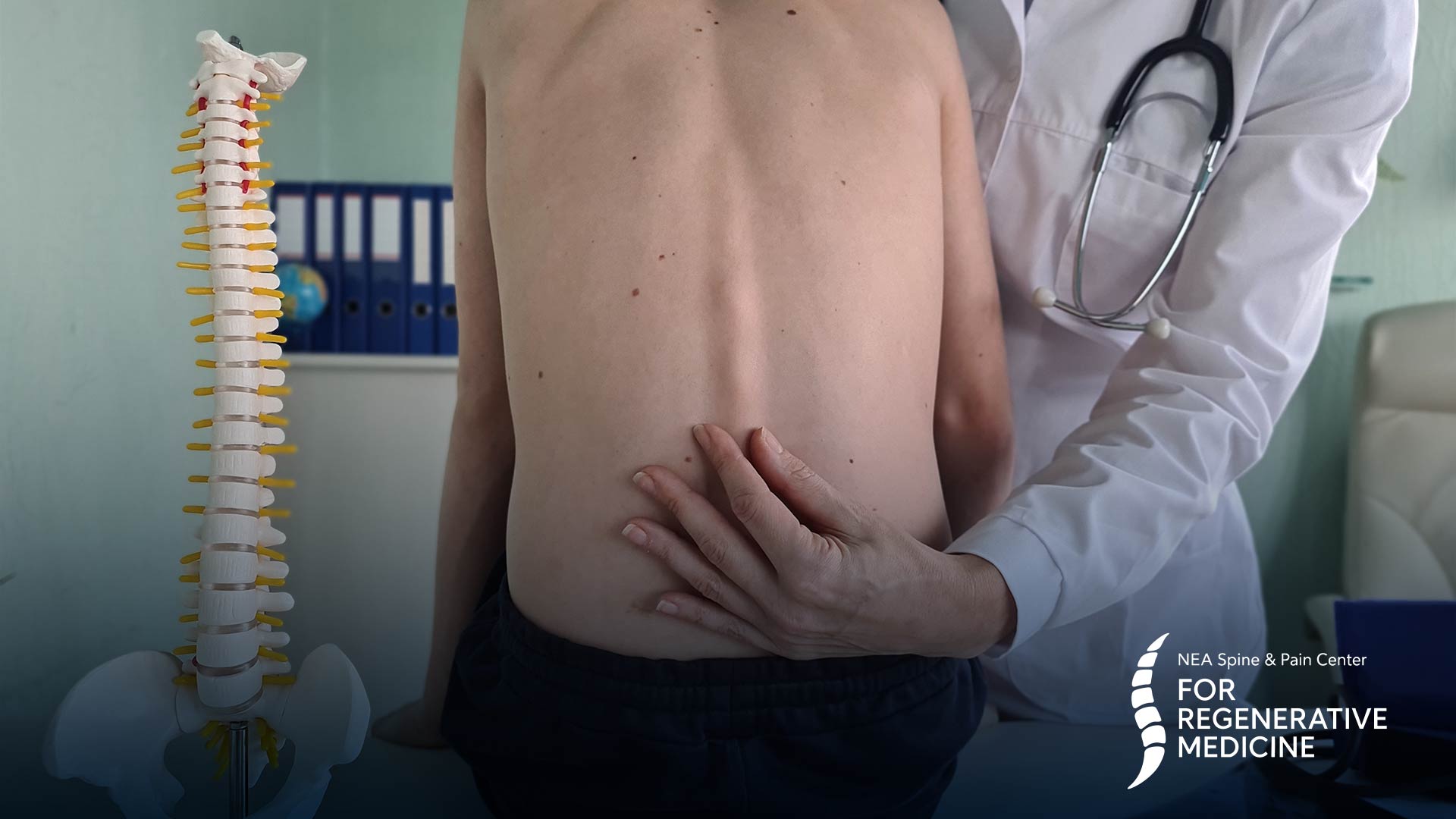
Back pain is a complex condition that can have numerous causes. Experience with interventional pain management for chronic back pain has shown that the pain is frequently caused by scar tissue buildup from injury, disc herniation, or previous back surgery.
Many patients who suffer from chronic back pain and radiating sciatic pain can avoid the necessity of spinal surgery through Caudal epidural adhesiolysis (Racz procedure).
Caudal epidural procedure (Racz procedure):
The caudal lysis, also known as Epidural Lysis of Adhesions (ELA), is a minimally invasive procedure that includes the endoscopic or percutaneous passage of a catheter (Racz catheter) into the epidural space under fluoroscopic guidance, while the patient is under general anesthesia or conscious sedation.
Scar tissue may impede nerves' normal function, resulting in pain and inflammation. Adhesiolysis for back pain is conducted to eliminate excessive scarring in the epidural space, a thin region between the interior of the spine and the protective covering that surrounds the spinal cord.
How can Dr. Abraham determine whether the Racz Epidural Infusion treatment is appropriate for you?
Adhesiolysis pain relief is exclusively advised for individuals experiencing severe, chronic pain. Patients must have a minimum of three months of unsuccessful, conservative treatment for back or sciatic pain in order to be qualified for the Racz procedure for sciatica.
In many cases, the Racz Infusion can also be beneficial following a successful micro-surgical nerve decompression, as this procedure may result in unpleasant surgical scarring or irritation near the spinal cord.
Evidence of nerve root irritation may be obtained through magnetic resonance imaging (MRI). It is recommended that a minimum of six weeks be allowed between the most recent epidural injection and the RACZ Catheter for safety reasons.
Which patients are suitable for epidural adhesiolysis?
• Failed Back Surgery Syndrome (FBSS): patients who have undergone prior neck or back surgery but continue to experience chronic pain as a result of the formation of scar tissue.
• Herniated disks that are not surgically correctable: epidural adhesiolysis is effective in the treatment of recent spinal disc herniation. The size of the herniation can be rapidly decreased by injecting a 10% saline solution into the surrounding area. The reduction in volume and related pressure accelerates the natural healing process, which would normally take months.
• Chronic back pain: patients with spinal stenosis, painful irritation of a nerve root (radiculopathy), sciatic pain resulting from nerve compression, and spinal disc protrusion.
• Excessive scarring: it is also capable of effectively treating numerous instances in which the anterior lateral epidural space is characterized by excessive scarring formed around the nerve due to injury or after spinal surgery.
How is the Racz catheter procedure carried out?
1. At the time of your admission, you will receive sedation via an intravenous (IV) catheter.
2. You will be instructed to lie on your stomach for the duration of the procedure.
3. The medical team will monitor your blood pressure, heart rate, and respiratory rate throughout the procedure.
4. Dr. Abraham will utilize the fluoroscope, a specialized X-ray equipment, to ensure the precise visualization of the anatomy.
5. Then, he will inject contrast dye to identify the exact location or scarring area in your epidural space that may be the source of your pain.
6. Dr. Abraham will guide the Racz catheter, a specialized catheter, to the scarred area using an X-ray.
7. He will inject a special medication called hyaluronidase to break the scarring along with the mechanical forces of the Racz catheter.
8. At last, Dr. Abraham will administer a combination of steroids and local anesthetics to alleviate pain and reduce inflammation following the breakup of adhesions.
9. The duration of the procedure is between 30 and 60 minutes.
Is the procedure likely to be painful?
Pain is typically alleviated by the anesthesia administered. Pain may intensify within the initial 48-72 hours as a result of the mechanical forces employed to fragment the scarring.
Racz catheter pros and cons:
Caudal lysis complications and RACZ catheter risks:
• The most prevalent risk is the local pain from the needle and catheter, which is a mild to moderate burning sensation that lasts for several days.
• Bleeding, infection, nerve injury, paralysis, and weakness in the lower extremities are uncommon risks.
Caudal lysis benefits:
• Upon studying Racz catheter vs surgery, Racz Epidural Neurolysis provides immediate pain relief without the risks associated with open, microsurgical spinal surgery.
• Racz Caudal Neurolysis protects patients from surgical soft tissue trauma in the sensitive area of the spinal cord, as the probe is able to access the spinal canal just through the skin and the natural openings at the base of the spine.
• The procedure of RACZ Epidural Neurolysis is typically conducted under local anesthesia, so the risks associated with general anesthesia are avoided.
• The Racz catheter technique serves as a diagnostic instrument as well. To visually inspect the cause of back pain, Dr. Abraham uses the probe to guide instruments, such as an endoscopic camera with a diameter of only a few millimeters, within the epidural space of the vertebral spine. This offers a direct diagnostic view, indicating the location of disc herniation, stenosis, nerve compression, and painful inflammation. This diagnostic insight is of the utmost importance, as it enables the visual examination of the spinal canal without the necessity of spinal surgery.
• Based on epidural adhesiolysis reviews, this technique shows a high safety profile and a promising epidural adhesiolysis success rate when compared to more invasive spine surgeries.
When are the results observed?
After the procedure, the caudal lysis effectiveness is typically observed within 2-4 weeks.
Post procedure care for Racz:
• No weight bearing (maximum 10 kg) for a week.
• Limited weight bearing (maximum 20 kg) for four weeks.
• Repeated physiotherapy during the epidural adhesiolysis recovery time.
• No contact sports or sports that involve rotation of the spine (e.g., golf) for three months following disc herniation.
For patients struggling with chronic back pain, caudal epidural adhesiolysis with Racz catheter offers a minimally invasive alternative. Dr. Abraham, board-certified anesthesiologist and pain management specialist at New England Advanced Spine and Pain Center for regenerative medicine, has extensive expertise in performing this advanced procedure with multiple Racz catheter success stories. Schedule your consultation today to learn more about your candidacy, recovery expectations, and the cost of epidural adhesiolysis.