Endoscopic Spine Procedures
Endoscopic spine surgery provides minimally invasive solutions like transforaminal discectomy and rhizotomy, offering faster recovery, reduced pain, and better outcomes compared to open techniques.
Share this page:
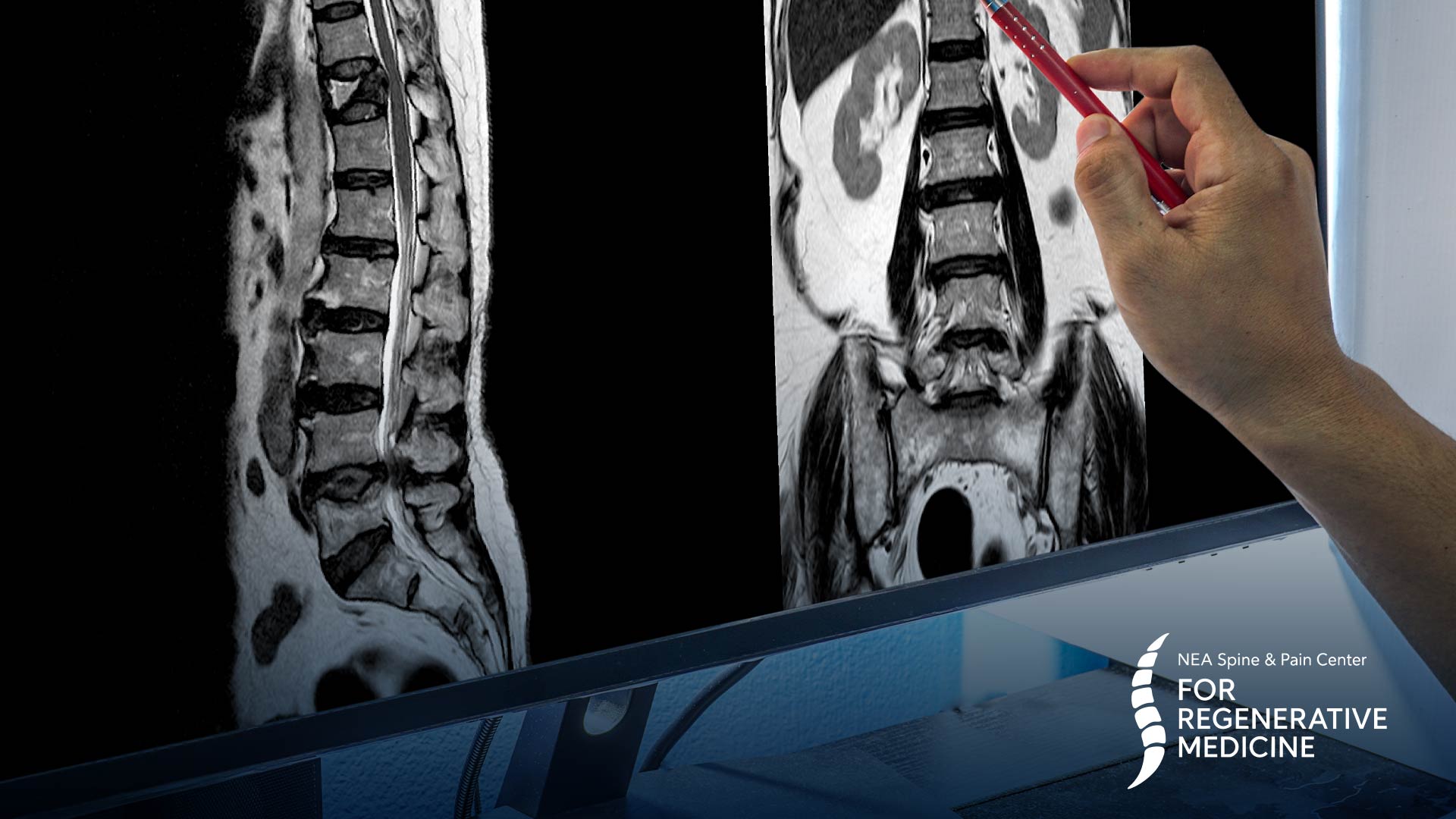
Endoscopic spine surgery uses a small endoscope and instruments inserted through a tiny incision to address disc herniations (transforaminal discectomy) or nerves causing pain (endoscopic rhizotomy). The transforaminal discectomy specifically removes herniated disc material through a natural spinal opening called the foramen, relieving nerve pressure. Endoscopic rhizotomy locates and ablates the nerve that transmits pain signals from arthritic facet joints, providing pain relief. The minimally invasive spine surgery, especially endoscopic techniques for spine, offers multiple benefits, such as minimal tissue damage, small incisions, faster recovery, and reduced risks compared to traditional open surgery.
1. Dr. Abraham creates a tiny skin puncture on the back.
2. He inserts the needle through the skin incision and into the disc, which is used to insert a thin wire into the disc.
3. Instead of the needle, an endoscope and a sequence of tiny tubes are introduced. Surgery is conducted through these passages using specialized instruments.
4. Dr. Abraham removes the ruptured and herniated disc subsequently, using specialized micro-instruments, alleviating pressure on the adjacent nerves.
The endoscopic role in spine surgeries:
An endoscope is a tiny tube that is inserted into the body to enable the surgeon to observe the interior of the spine. The endoscope is equipped with a high-definition (HD) camera on one end and a precision lens on the other. To conduct a spinal procedure, microscopic instruments are introduced through the endoscope. The endoscope-mounted HD camera enables the surgeon to observe the entire procedure from within the spine. The surgical video is displayed on a heads-up display or high-resolution monitor, minimizing endoscopic spine procedure risks.Endoscopic transforaminal disectomy:
How is the transforaminal approach explained?
Transforaminal disectomy is an endoscopic spine surgery for herniated disc. Dr. Abraham accesses the disc through a small opening in the skin and through natural openings in the vertebrae, called the foramen, through a needle.1. Dr. Abraham creates a tiny skin puncture on the back.
2. He inserts the needle through the skin incision and into the disc, which is used to insert a thin wire into the disc.
3. Instead of the needle, an endoscope and a sequence of tiny tubes are introduced. Surgery is conducted through these passages using specialized instruments.
4. Dr. Abraham removes the ruptured and herniated disc subsequently, using specialized micro-instruments, alleviating pressure on the adjacent nerves.
5. Real-time HD video and X-rays guide the surgical process.
• Endoscopic transforaminal discectomy preserves spinal stability and strength as the needle does not disrupt healthy tissues because it is delivered to the disc through a natural spinal opening.
• Transforaminal discectomy vs open surgery, the spine is not accessed by stripping muscles from bone, removing healthy bone to access the spinal openings, or cutting vital spinal ligaments to access the disc.
• A same-day procedure is possible by performing the procedure through a small skin incision and maintaining healthy tissues, resulting in a faster recovery.
• Get plenty of rest and engage in moderate stretching for the first two to three days.
• The activity level should be gradually increased over a period of seven days, beginning with short outings and gradually transitioning to routine daily activities. For the initial few months, refrain from engaging in strenuous activities, heavy lifting (over 10 to 15 pounds), and twisting.
• Work can be resumed within seven days if your occupation is stationary.
• Physical therapy or chiropractic care may be resumed after four weeks.
• Rehabilitation will typically be simpler and speedier than with conventional surgery due to the minimally invasive nature of the procedure.
In the back of the spine, endoscopic rhizotomy enables the direct visualization of the medial branch nerves that supply the arthritic facet joints. A facet joint denervation is another term to describe this procedure.
The purpose of the rhizotomy surgery is to identify these painful nerves using an endoscope and subsequently interrupt them using specialized instruments to alleviate their symptoms.
1. Dr. Abraham makes a small incision in the skin over the targeted nerve.
2. Then he inserts a small tube through the tiny incision and advances it to the vertebral surface, where the pain-sensing nerve of the facet joint is located.
3. The tube is used to insert a tiny endoscope.
4. Subsequently, the pain-sensing nerve is interrupted (cut) using specialized micro-instruments, which leads to the resolution of back pain.
5. Real-time HD video and X-rays are utilized to guide the surgical process.
• Elevated endoscopic rhizotomy success rate.
• Small incision and minimal scar tissue.
• Outpatient procedure.
• Long-term alleviation of back pain.
• Short recovery time.
• Extremely minimal blood loss.
• Maintaining spinal mobility.
• The patient experiences a limited range of movement in the lumbar spine, particularly when bending backwards.
• Diagnostic injections have identified facet joint arthritis as the source of the discomfort.
If you’re exploring advanced minimally invasive spine solutions— from transforaminal discectomy cost to choosing the best surgeons for endoscopic spine surgery and comparing endoscopic discectomy vs microdiscectomy — trust the expertise of Dr. Abraham, board-certified anesthesiologist and pain management specialist at New England Advanced Spine and Pain Center for regenerative medicine. Book your consultation today and take the first step toward pain-free living.
What are the transforaminal approach benefits?
• The disc is accessed from the skin using a needle, resulting in a skin nick rather than a skin incision.• Endoscopic transforaminal discectomy preserves spinal stability and strength as the needle does not disrupt healthy tissues because it is delivered to the disc through a natural spinal opening.
• Transforaminal discectomy vs open surgery, the spine is not accessed by stripping muscles from bone, removing healthy bone to access the spinal openings, or cutting vital spinal ligaments to access the disc.
• A same-day procedure is possible by performing the procedure through a small skin incision and maintaining healthy tissues, resulting in a faster recovery.
What are the details of endoscopic discectomy recovery?
You will walk out the door and return home the same day with pain medications. Dr. Abraham recommends spine surgery recovery tips:• Get plenty of rest and engage in moderate stretching for the first two to three days.
• The activity level should be gradually increased over a period of seven days, beginning with short outings and gradually transitioning to routine daily activities. For the initial few months, refrain from engaging in strenuous activities, heavy lifting (over 10 to 15 pounds), and twisting.
• Work can be resumed within seven days if your occupation is stationary.
• Physical therapy or chiropractic care may be resumed after four weeks.
• Rehabilitation will typically be simpler and speedier than with conventional surgery due to the minimally invasive nature of the procedure.
Endoscopic rhizotomy:
Rhizotomy is a minimally invasive procedure for interrupting a spinal nerve to alleviate neck and back pain caused by arthritis in the facet joints of the spine.Facet joints arthritis:
Facet joints are the joints that connect the various vertebrae of the spine. The joints are situated on both sides of the vertebrae, extending from the neck to the lower back. They are innervated by medial branch nerves, which are exceedingly small. These nerves can be irritated and compressed when facet joints become arthritic, resulting in severe chronic low back pain.What is a minimally invasive endoscopic rhizotomy surgery?
A rhizotomy for chronic back pain is performed following the confirmation of the facet joint as the source of discomfort through prior injection procedures.In the back of the spine, endoscopic rhizotomy enables the direct visualization of the medial branch nerves that supply the arthritic facet joints. A facet joint denervation is another term to describe this procedure.
The purpose of the rhizotomy surgery is to identify these painful nerves using an endoscope and subsequently interrupt them using specialized instruments to alleviate their symptoms.
What are the rhizotomy procedure details?
Dr. Abraham targets the nerve that transmits nerve signals from the inflamed facet joint through a needle.1. Dr. Abraham makes a small incision in the skin over the targeted nerve.
2. Then he inserts a small tube through the tiny incision and advances it to the vertebral surface, where the pain-sensing nerve of the facet joint is located.
3. The tube is used to insert a tiny endoscope.
4. Subsequently, the pain-sensing nerve is interrupted (cut) using specialized micro-instruments, which leads to the resolution of back pain.
5. Real-time HD video and X-rays are utilized to guide the surgical process.
What are the benefits of endoscopic rhizotomy?
• Minimally invasive spine surgery.• Elevated endoscopic rhizotomy success rate.
• Small incision and minimal scar tissue.
• Outpatient procedure.
• Long-term alleviation of back pain.
• Short recovery time.
• Extremely minimal blood loss.
• Maintaining spinal mobility.
When is it advisable to perform a rhizotomy procedure?
• The patient has been experiencing lower back pain for more than six weeks without any response to non-surgical spine treatments.• The patient experiences a limited range of movement in the lumbar spine, particularly when bending backwards.
• Diagnostic injections have identified facet joint arthritis as the source of the discomfort.
What is the recovery process for rhizotomy?
You will walk out the door and return home the same day with pain medications. We recommend refraining from strenuous physical activity or heavy lifting for 2 to 3 days. You will be able to resume your regular activities and work after that. Chiropractic and physical rehabilitation can be resumed immediately.If you’re exploring advanced minimally invasive spine solutions— from transforaminal discectomy cost to choosing the best surgeons for endoscopic spine surgery and comparing endoscopic discectomy vs microdiscectomy — trust the expertise of Dr. Abraham, board-certified anesthesiologist and pain management specialist at New England Advanced Spine and Pain Center for regenerative medicine. Book your consultation today and take the first step toward pain-free living.