Treating Spinal Stenosis Without Surgery
Home Patient Guide Treating Spinal Stenosis Without Surgery
Treating Spinal Stenosis Without Surgery
Spinal stenosis often improves without surgery. Dr. Abraham, at New England Advanced Spine and Pain Center, offers injections to relieve pain, reduce inflammation, and restore mobility.
Share this page:
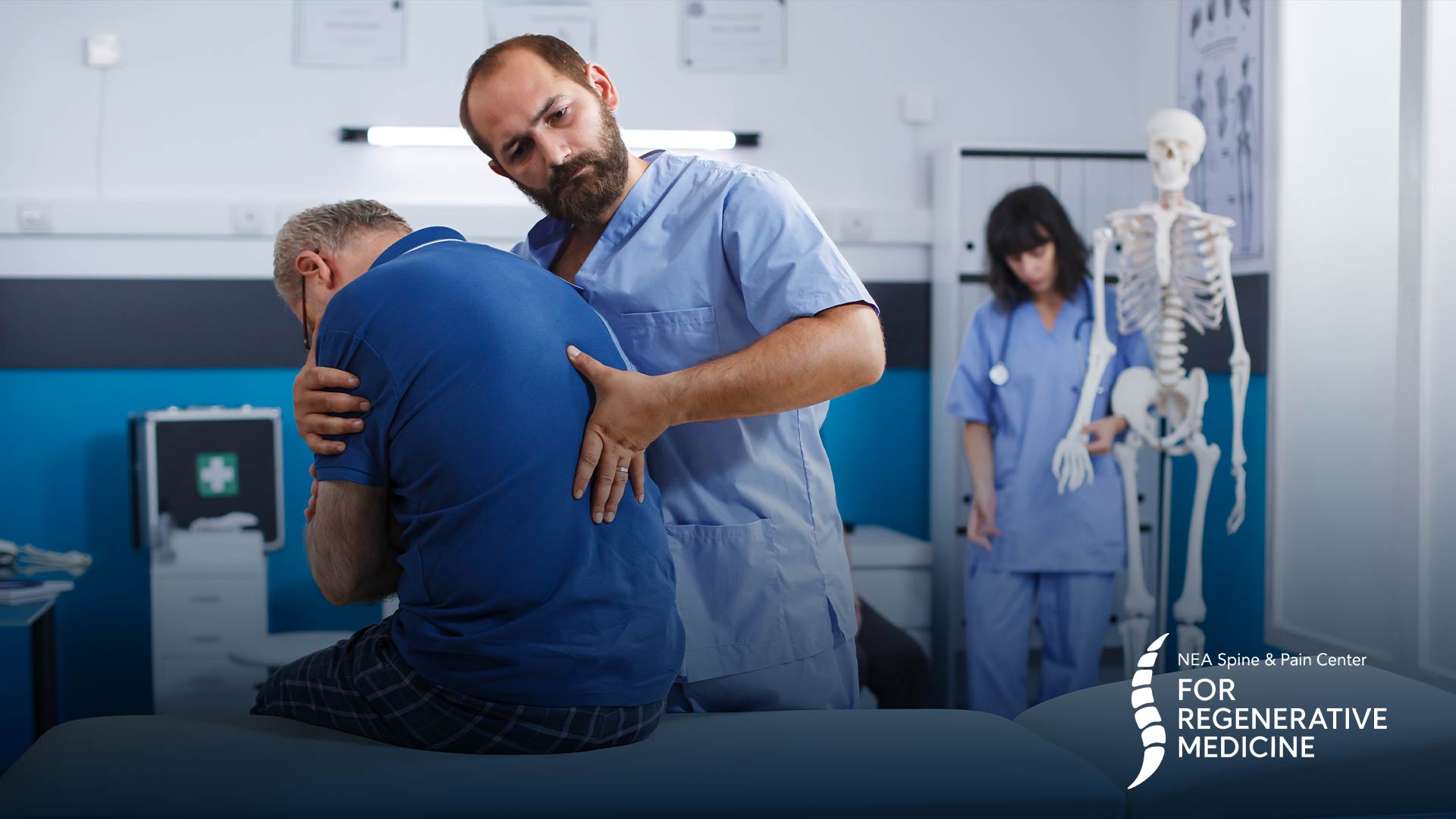
Spinal stenosis can be treated through noninvasive ways. The majority of spinal stenosis cases actually get better without surgery. Dr. Abraham, a board-certified anesthesiologist and pain management specialist at New England Advanced Spine and Pain Center for regenerative medicine, provides comprehensive care for a variety of spine problems, including spinal stenosis, and specializes in interventional and chronic pain management. You can be a candidate for spine surgery if nonsurgical therapies are unable to relieve your condition to your satisfaction. It's advisable to look into nonsurgical treatment options before discussing the prospect of surgery.
Spinal stenosis: what is it?
Your spinal canal is a hollow area created by your vertebrae through which a bundle of nerves passes. When the spinal canal narrows, the spinal cord or the nerves that supply your muscles are compressed, resulting in spinal stenosis. Back pain and numbness are caused by the irritation resulted from the compression. Additionally, it may result in weakness in your legs and lower back. Dr. Abraham provides a range of noninvasive therapeutic options for spinal stenosis patients, depending on the location and degree, and he has helped a lot of cases.
Spinal stenosis treatment without surgery:
Many spinal stenosis patients with mild to moderate symptoms, can manage their symptoms without surgery. Among the most popular non-surgical methods for treating spinal stenosis are injections, which are:
Facet joint injection is also known as a facet block and involves delivering a local anesthetic and corticosteroid injection straight into the affected facet joint. The anesthesia relieves the joint's pain temporarily while the corticosteroids lessen joint inflammation, causing the joint to shrink and consequently decreasing the pressure on the damaged nerve root.
Medial branch blocks identify whether the pain is originating from the nerves supplying the facet joints and offer short-term relief. Dr. Abraham injects a small amount of anesthesia near the medial branch nerves, which transmit pain signals from the facet joints to the brain. Dr. Abraham schedules additional therapy if your pain subsides following this procedure, confirming that these nerves are involved.
Dr. Abraham injects a long-acting corticosteroid drug around the compressed spinal nerves guided by contrast dye and X-ray. To reduce pain during the procedure, a local anesthesia is administered prior to the corticosteroid injection. These steroid injections relieve pain and inflammation for weeks or months, varying from each patient.
Inhibiting the sympathetic nervous system through a lumbar sympathetic block can alleviate lower back pain and lessen chronic pain. When other therapies have failed, a lumbar sympathetic block may be used to treat complex regional pain syndrome or particular types of neuropathic pain.